Taylor Otto · 26 September 2026
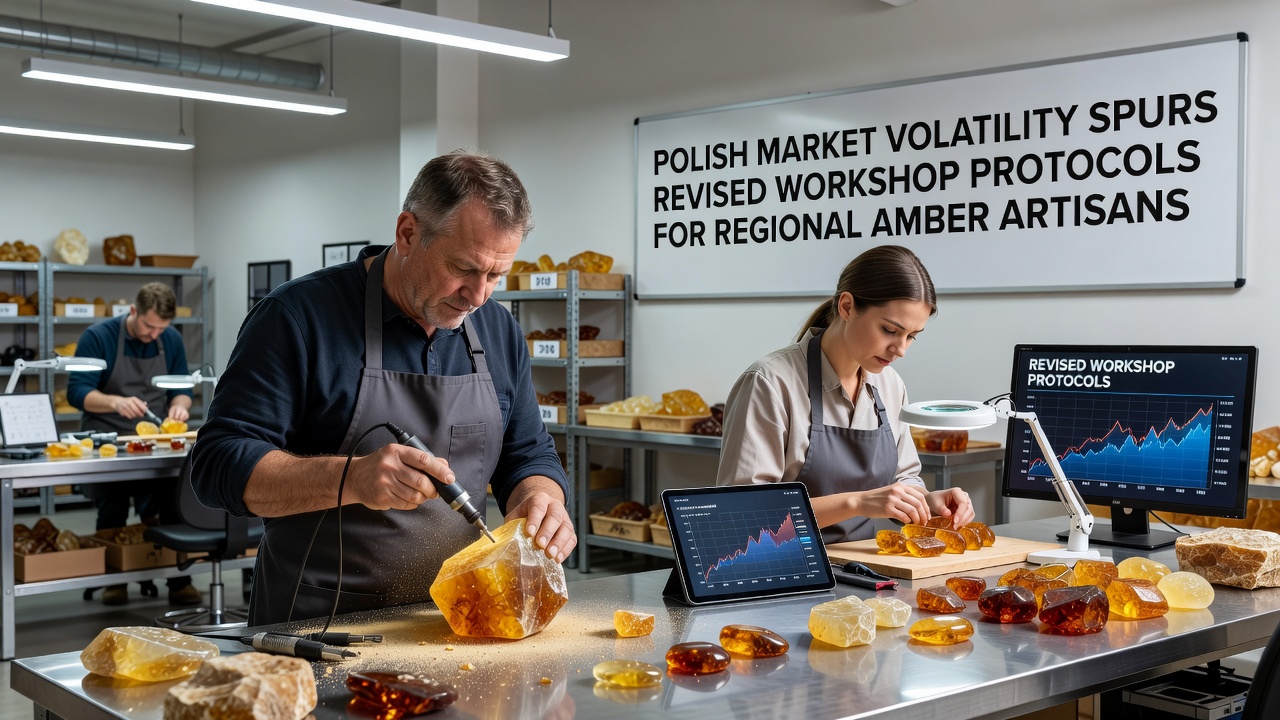
Polish Market Volatility Prompts Revised Workshop Protocols for Amber Artisans
Market volatility in Poland has driven changes to workshop protocols among regional amber artisans, with new guidelines taking shape to address supply chain pressures and pricing instability. Data from the Polish Central Statistical Office shows amber export values fluctuated by 18 percent between 2024 and 2025, prompting artisan groups to adjust operational standards before September 2026.
Market Pressures and Artisan Responses
Amber prices on the Baltic trade routes have swung sharply since late 2023, and those swings reached Polish workshops by mid-2025. Researchers at the University of Gdańsk tracked a 22 percent drop in raw material deliveries during the first quarter of 2025, while finished piece orders rose in some export markets. Artisans responded by forming regional committees that drafted revised protocols covering inventory tracking, material sourcing verification, and pricing adjustment schedules.
One study released by the European Trade Association for Amber Products revealed that 64 percent of Polish workshops reported delayed shipments in 2025, compared with 31 percent the previous year. The same report linked these delays to currency movements and shifts in demand from Asian jewelry markets. Committees therefore introduced mandatory quarterly reviews of supplier contracts and required artisans to maintain minimum reserve stocks of certified Baltic amber.
Protocol Updates Scheduled for 2026
Revised protocols emphasize documentation of every amber batch from extraction point to finished item. Workshops must now log origin certificates, weight measurements, and quality grades at each production stage. Training sessions on these procedures begin in spring 2026, with full implementation targeted for September 2026 across Pomerania and Warmia-Masuria regions.
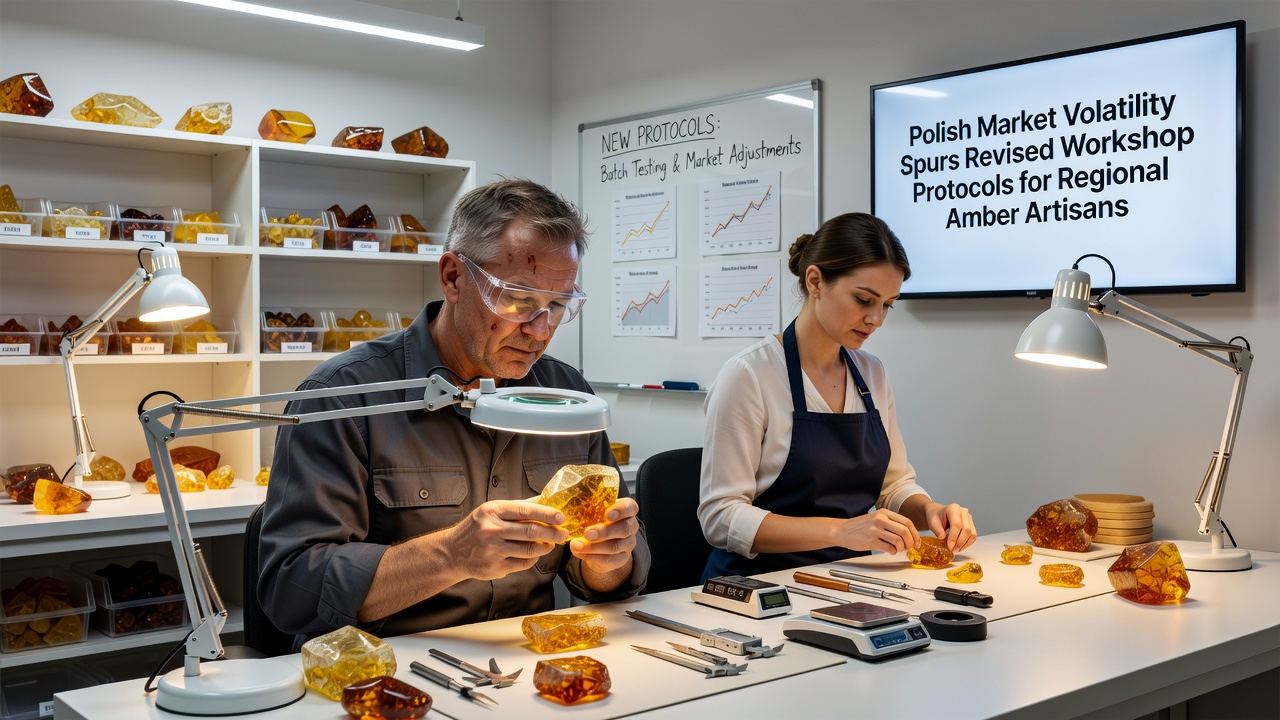
Observers note that digital record-keeping forms a central part of the new standards. Artisans receive templates that integrate with existing sales software, allowing real-time updates on stock levels and price indices. The system draws on price data published monthly by the Polish Amber Exchange, which began issuing public volatility alerts in 2024.
Regional Impact and Support Measures
Smaller workshops in the Gdańsk area have already begun pilot testing of the protocols. Results indicate a 15 percent reduction in material waste after the first three months of stricter logging. Larger cooperatives report improved coordination with suppliers in Lithuania and Latvia, where similar documentation rules took effect in 2025.
Government grants administered through the Polish Ministry of Economic Development cover part of the software licensing costs for participating artisans. Figures released in early 2026 show 142 workshops have applied for these grants, representing roughly one-third of registered amber businesses in northern Poland.
Looking Ahead
Industry analysts project that sustained protocol adherence could stabilize pricing by late 2027, provided export markets maintain current demand levels. Continued monitoring by the European Commission’s internal market directorate will track whether the changes produce measurable effects on cross-border trade volumes.
Conclusion
Polish amber artisans face ongoing market volatility that has already produced concrete protocol revisions. Implementation begins in September 2026, supported by training programs, digital tools, and targeted grants. The measures focus on documentation, inventory reserves, and quarterly pricing reviews, all drawn from recent trade data and regional coordination efforts.