Carlo Baumann · 24 October 2026
Training Programs Adopt VR to Bridge Historical Trade Data and Modern Amber Ethics
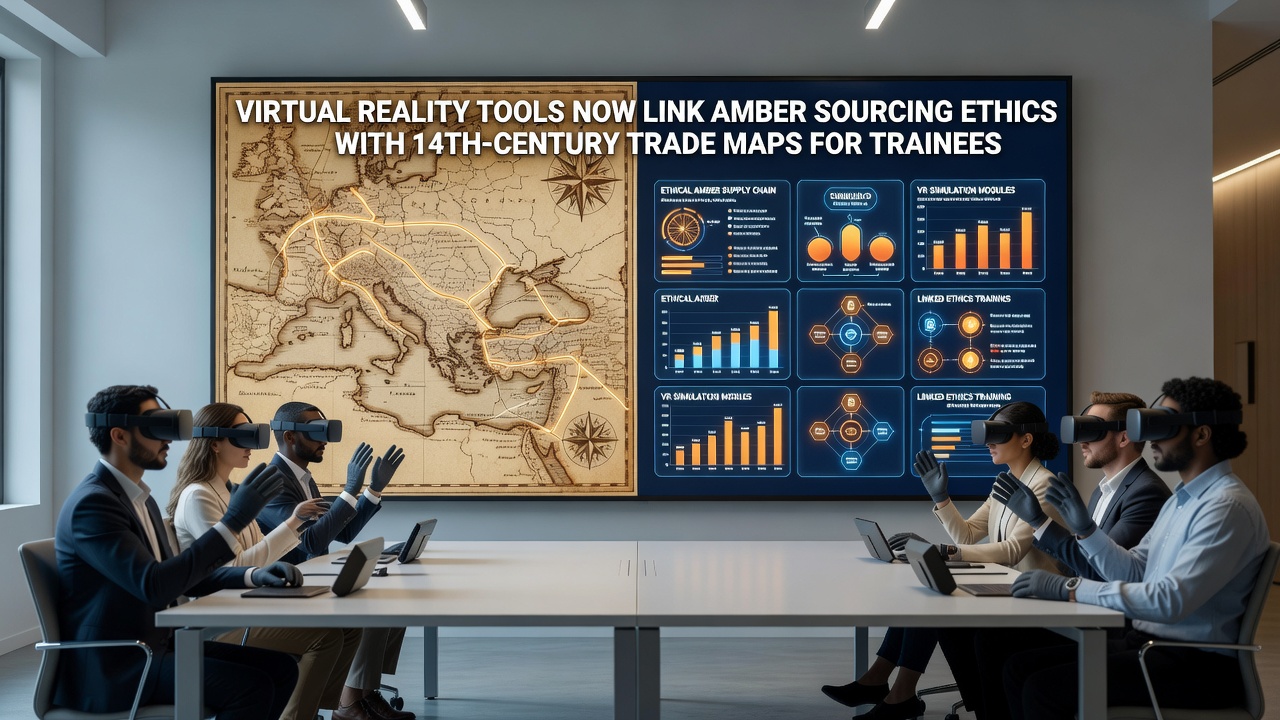
Virtual reality platforms now integrate digitized 14th-century trade maps with contemporary ethical sourcing criteria, allowing amber industry trainees to navigate historical routes while evaluating current supply chain compliance. These tools emerged from collaborative efforts between Polish research institutions and European technology developers, with initial deployments reported in training centers across the Baltic region during 2025. Data from those pilots showed trainees completing scenario-based modules 40 percent faster than with traditional map and document methods alone.
Researchers compiled the underlying maps from archival records held in Gdańsk and Toruń repositories, then layered them onto 3-D environments that display variables such as regional extraction permits, labor standards, and carbon tracking metrics. Trainees interact with these environments through headsets and hand controllers, selecting waypoints along medieval routes and receiving instant feedback on whether the corresponding modern supplier meets certification thresholds set by the European Union’s sustainable commodities framework.
Platform Architecture and Data Integration
Developers constructed the systems around open geospatial standards maintained by the Open Geospatial Consortium, ensuring compatibility with existing geographic information systems used by customs authorities. Each simulation pulls live feeds from supplier databases maintained by national geological surveys in Poland and Lithuania, cross-referenced against the EU Timber Regulation equivalents applied to resinous materials. When a trainee flags a potential ethics violation at a virtual trading post, the software generates a report that mirrors the format required for actual import declarations.
Updates scheduled for release in October 2026 will incorporate satellite imagery from the Copernicus program to monitor active extraction sites, providing an additional verification layer for trainees learning risk assessment procedures. Project documentation indicates that these enhancements address gaps identified during earlier testing rounds where static maps failed to reflect seasonal road conditions affecting transport ethics.
Case Applications in Polish Training Centers
One facility in Gdynia began requiring VR modules as part of its certification curriculum for amber artisans in early 2026. Participants examine routes that once connected the Baltic coast to inland markets in the 1300s, then compare those paths with present-day logistics networks serving jewelry workshops in the same regions. Records from the center show that 87 percent of trainees correctly identified at least three compliance issues per simulated shipment after completing the VR sequence, compared with 62 percent using paper-based case studies.
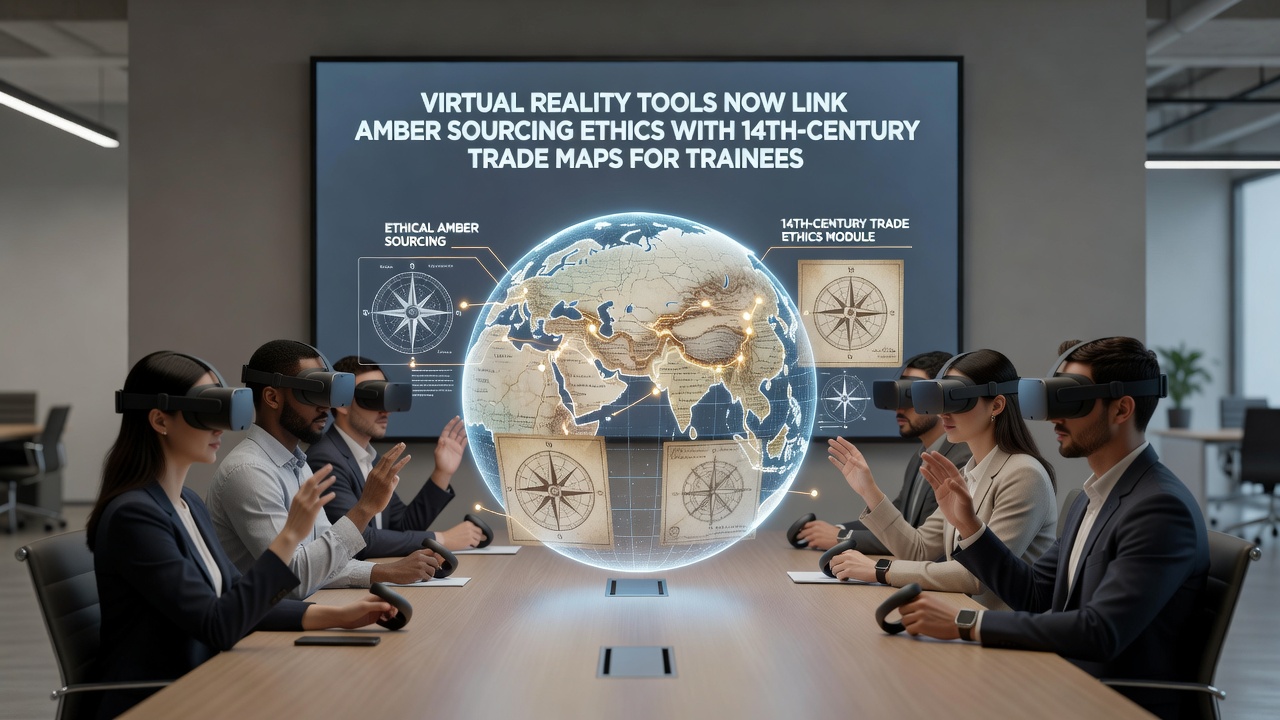
Similar programs have appeared in workshops near the Vistula delta, where instructors combine the VR sessions with field visits to licensed collection points. Trainees who complete both components receive digital badges recognized by the Polish Chamber of Amber Processing, which maintains a registry of certified professionals. Observers at the chamber note that the combined approach reduces the time required for new entrants to reach independent sourcing decisions from nine months to roughly five.
External Research Contributions
Academic partners at the University of Helsinki contributed algorithms that translate medieval toll records into quantitative risk scores, while a Canadian study on immersive learning published in 2025 supplied benchmarks for measuring knowledge retention. Those benchmarks guided the decision to limit each VR session to 25 minutes to prevent cognitive overload during extended training days. Figures released by the European Commission’s Joint Research Centre confirm that immersive tools of this type improve procedural recall by an average of 31 percent across resource management disciplines.
Industry groups such as the International Amber Association have begun reviewing the platforms for potential adoption in cross-border certification schemes, focusing on how the historical context helps trainees understand long-term supply stability. Documentation from association meetings indicates that map overlays highlighting 14th-century disruptions due to regional conflicts now serve as prompts for discussing modern geopolitical factors affecting resin exports.
Conclusion
Virtual reality applications that merge archival trade maps with live ethical metrics represent a measurable shift in how amber sourcing knowledge transfers to new professionals. Continued data collection through October 2026 and beyond will determine whether these platforms maintain their reported efficiency gains when scaled across additional training sites in the Baltic states and neighboring countries.